Work Method Foundry Field Notes About Edge Brief
Justin Jarvinen
Active Innovation

Strategy, shipped.

Most firms hand you a deck and wish you luck, and the value dies somewhere in the handoffs between the strategy and the thing that ships. So I removed the handoffs. I read your business until the edge shows, build the working system that captures it, and answer for the number we write down together on day one. One orchestrator, end to end.

See the work →

Field Notes · Featured

Training your agents on neuroeconomics

no. 01 · decision science

Meet Justin Jarvinen

25+ years building companies at the intersection of strategy, technology, and design — for middle-market operators and the venture ecosystem.

Selected recognition~60 design & innovation awards

Crain’s40 Under 40
Red Herring MagazineInnovator of the Year
Ernst & YoungEntrepreneur of the Yearrunner up
  • The Webby Awards
  • Fast Company
  • Ad Age

Why this works

The whole arc of innovation + AI changes what’s possible.

A deeply experienced innovation orchestrator, multiplied by AI, ships better outcomes far faster, and answers for the result.

01

Twenty-five years across the whole arc.

Twenty-five years of building companies gave me deep command of the full arc of innovation — strategy, brand, and the working system — and AI now multiplies how much of it ships from one set of hands. Nothing is lost in translation because there is no translation, and the practice answers on outcomes, not deliverables.

Learn more about Justin

02

One bet, or the whole portfolio.

Bring me a single outcome or hand me the entire innovation portfolio to govern; either way the work arrives enterprise-ready in weeks, not months. You hold the optionality — scale the bets that prove out and retire the ones that don’t — and every result is measured against a number we set in advance, so whether it worked is a fact, not an opinion.

Learn more about the Modven Foundry

03

Active Innovation means owning outcomes.

Advice fades the quarter it’s delivered; a working system you own keeps paying. Because building is no longer the bottleneck, you can commission the outcome itself and hold innovation on your balance sheet like any other asset — measured, and yours to keep. That is what owning outcomes means.

Read Justin’s article on the future of innovation in the age of AI

See how the Edge Brief works →

The method · Active Innovation

95 percent of corporate AI never touches profit. The difference is the orchestrator.

For most of history, building was the bottleneck, so leaders bought thinking — decks, workshops, roadmaps — and the value went to whoever could build. AI changed the arithmetic. Building is no longer scarce; judgment is — so you can finally commission the outcome instead of the opinion. Doing that on purpose is a four-stage discipline.

STRATEGY THE BUILD P&L WHERE THE 95% LEAKS OUT

Most corporate AI value never crosses the gap between the strategy and the build. Closing it is the entire practice. MIT, 2025

01

Discover

Find the edge — or the portfolio of edges — worth building.

I get inside the business, the numbers, and the market until the real opportunity is obvious — the one that moves the P&L, not the one that sounds good in a workshop. Sometimes that’s a single, unmistakable bet; sometimes a ranked portfolio of them. This is where most engagements quietly fail, and where I spend the most care.

Discover resolves to one winning outcome or a ranked portfolio. DISCOVER or ONE WINNING OUTCOME A RANKED PORTFOLIO
02

Architect

Design the system that captures it.

The thesis becomes a concrete plan: what gets built, how it makes or saves money, what proves it worked, and what you’ll own at the end. No hand-waving, no “phase two.”

03

Build

Ship the working system, not a prototype.

I build it — the software, the brand, the workflow, whatever the edge requires — and put it in production. You watch the thing run, not a slideshow about the thing.

04

Commercialize

Make it pay, and hand you the keys.

We measure it against the number we set in Architect, tune it, and transfer it to you clean. You own the asset and the team to run it. I’m accountable for the outcome, not a retainer.

The Foundry · a Modven thesis

One problem, paid twice.

For most companies, innovation has never reliably paid off — too slow and too wasteful to count on. AI changes that: for the first time, an innovation apparatus can create real value, fast. The Foundry goes further still. Every operating problem holds two kinds of value most owners never collect — the profit when it’s fixed, at your own multiple, and equity in the company the fix becomes when your industry shares the problem.

Read the Foundry thesis →

One problem, paid twice. THE PROBLEM $ THE FIX at your own multiple A COMPANY founding equity PAID TWICE

The second harvest

One fix, captured twice — then multiplied across the portfolio.

The fix, on your own multiple
$20M VALUE TODAY $25M +$5M AFTER THE BUILD

Solve the operating problem and the business is simply worth more on its own multiple — say, +$5M in this example. That is the first harvest, and it’s where most engagements stop.

The same idea, taken to market
+$5M THE FIX YOUR MULTIPLE TO MARKET $30M company YOUR STAKE ≈ $10M

The in-house fix creates value at your own multiple. Taken to market — when the industry shares the problem — the same idea becomes a company, and your founding stake alone can dwarf the fix. That is the second harvest.

The same engine, across the portfolio
THE RANKED PORTFOLIO COMPOUNDS VALUE CREATED YOUR STAKES COMPOUNDING

Discover ranks a portfolio of these bets. Run the apparatus across all of them and the harvests compound — the kind of value creation a company’s innovation function has never actually delivered, now within reach because the build is no longer the bottleneck.

Read the full Foundry thesis → illustrative example · full, sourced math on the Foundry page

Capabilities

A portfolio to manage, and a process to ship each bet.

I design and govern the whole innovation portfolio, then run the same four-stage process on every bet worth making — software, brand, or physical product. The last runs through a fully equipped prototyping lab and a dedicated engineering partner, which is how a venture like Tyo gets designed, prototyped, and made manufacturable, not just planned on paper. Pick a stage to see what that involves.

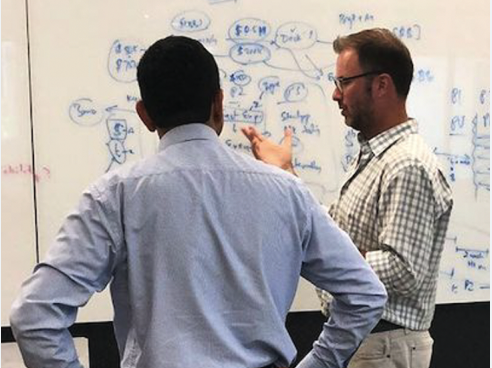
Justin working through a venture model with a client at the whiteboard
Working the model live · a Discover session

Selected work

This is what shipped.

Read these as evidence rather than portfolio filler — each one is a thing that actually shipped: a live system, a real number, a brand in market. Scroll →

Music · Licensing

Asked to lift the value of a legendary brand. In 45 days.

$320M+acquisition · 50%+ above prior value

Doc McGhee called: make Kiss worth more before a sale. In about 45 days my team and I designed twelve new companies and the board presentation that reframed the brand — helping drive a $320M-plus acquisition by Pop House, more than 50% above prior value.

View the case
Kiss · brand film
▸ brand film
Built in 45 days
12
companies + the deck
Brand value · prior → sale
prior
at sale
+57%
Hardware · Venture

An $18B category built on old tooling, rebuilt from scratch.

$4.5Min pre-orders · $20M+ first-year valuation

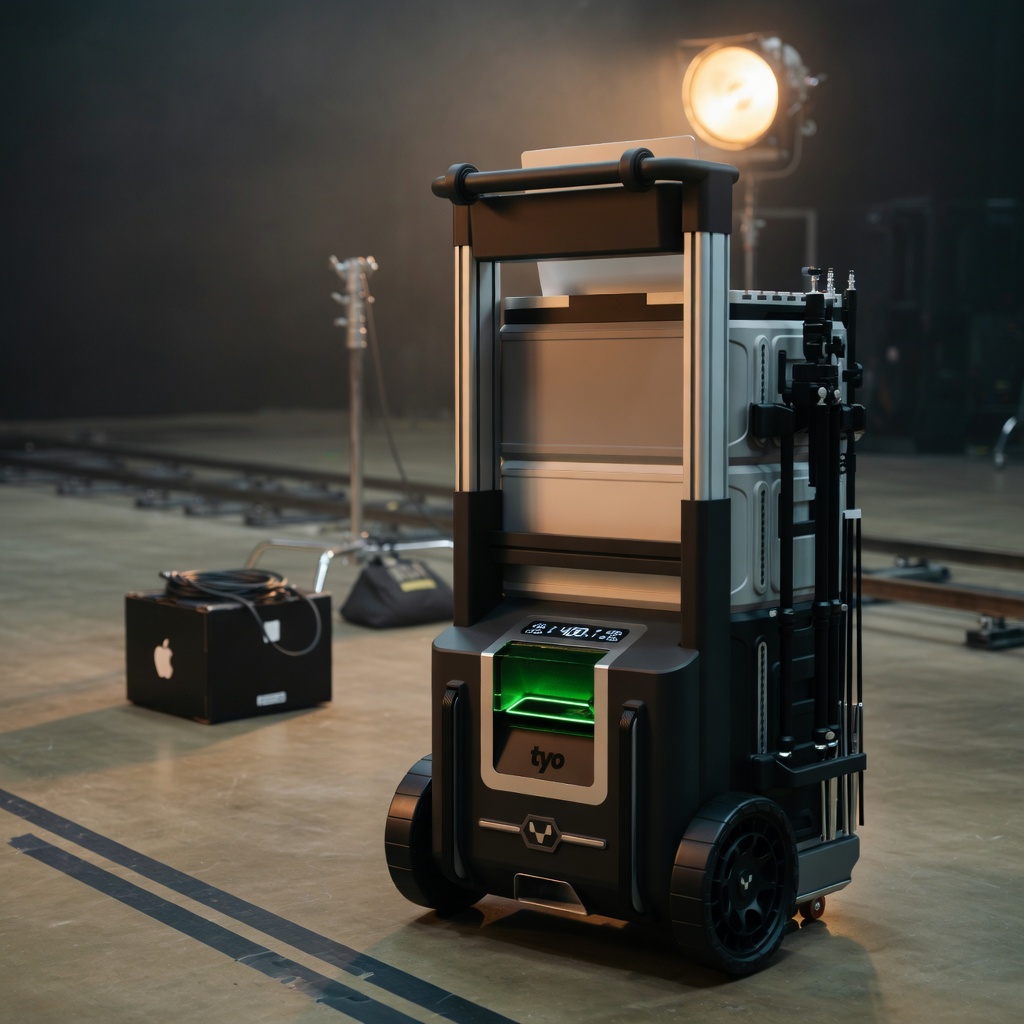
Pelican and its peers still injection-mold cases offshore, unchanged for decades. Tyo rebuilds the category: AI-driven design, distributed additive manufacturing at 50% margin with no offshore tooling, and a creator marketplace where the community designs the accessories — a premium challenger, not another case.

View the case
The Tyo modular worksystem on set ▸ brand + venture
How it disrupts
AI designAdditive mfgCreator platform
On-demand
7 days
order to delivery · 0 inventory
Sports · Player Intelligence

The first time a whole cohort can be read for who actually advances.

HCGcohort-scale predictive score · 0–100

For the first time, an entire cohort — not just the standouts — is scored on one standardized, opponent-adjusted scale, validated out-of-sample against who actually advances. Every skill is normalized against an age- and tier-matched population and regressed for small samples, so the number is a predictive signal, not a hunch.

View the case
● live product
Player Profile · 2026–27
JackJarvinen
16UF#9Shoots LLake Bluff, IL
78HCG
±495% CI
86thpctile · U16 AAA
n=214cohort
03Component z-scores vs cohort
xG offense 25%
+1.7σ
Play-driving 25%
+1.4σ
Transition 20%
+1.1σ
Defensive xGA 15%
+0.6σ
Discipline 15%
−0.2σ
Standardized against an age- and tier-matched population · opponent-adjusted xG & controlled-entry transition · relative-age normalized · empirical-Bayes shrinkage on GP < 8 · split-half reliability r=.83 · validated out-of-sample against advancement to Juniors / NCAA.
Signal, not noise
r = 0.83
split-half reliability

The front door

One conversation. One book. One honest answer.

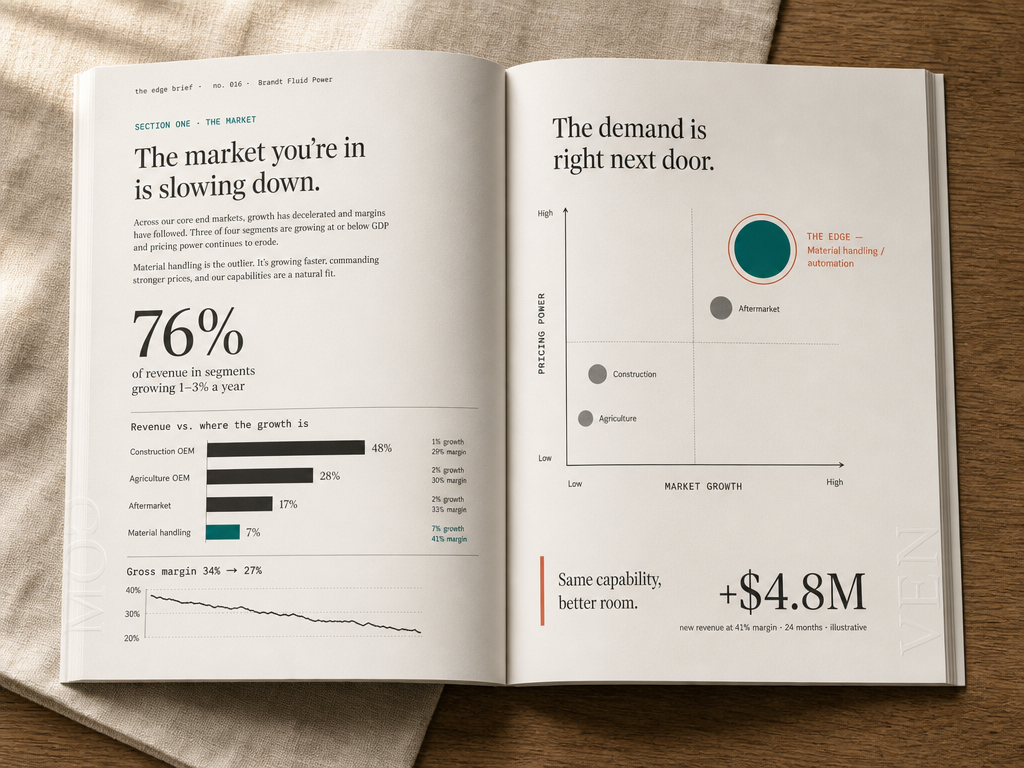
Every engagement begins with an Edge Brief: a paid working session where we get into your numbers, your market, and your constraints — followed five to seven days later by a bound, board-ready brief of sixteen to twenty-two pages. It costs $500, credited in full if we build together, and it’s yours to keep either way.

An Edge Brief, open to the market section — a spread on Brandt Fluid Power

08

Section two

The thesis: where your edge actually is.

09

Section three

The number it should move.

+$1.4Mprojected annual impact · pre-registered

the edge brief · no. 016 · your business 16–22 pages · delivered in 5–7 days · yours to keep
The thesisThe specific edge worth building, stated plainly and argued with your data.
The systemWhat I’d build to capture it, in concrete terms you can price.
The numberWhat it should move, pre-registered, so we both know if it worked.
The pathDiscover → Architect → Build → Commercialize, mapped to your quarter.
The Foundry ScreenWhether your problem is yours alone or your industry’s — and what that’s worth.
The honest readIncluding whether this is worth doing at all, and what I’d do if I were you.
How the Edge Brief works →

by application · a limited number of engagements at a time

Who this is for

For owners who’d rather hold the outcome than file the deck.

I work best with ambitious mid-market and challenger companies — roughly $25 to $250 million in revenue, usually founder- or family-held, sometimes PE-backed — who have a real growth thesis and nobody accountable for shipping the system behind it. If you want to own a machine and know exactly who answers for whether it works, we’ll get along fine.

Meet Justin